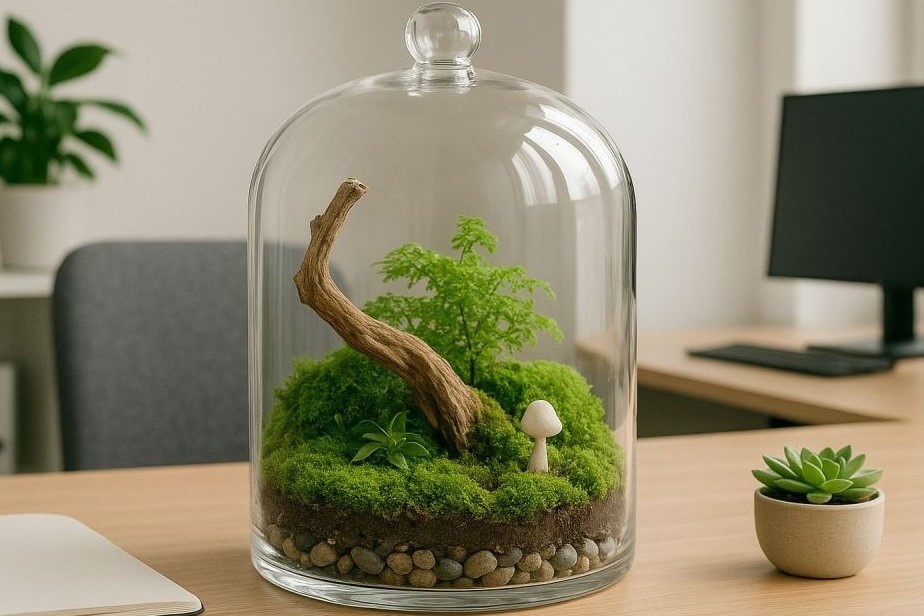
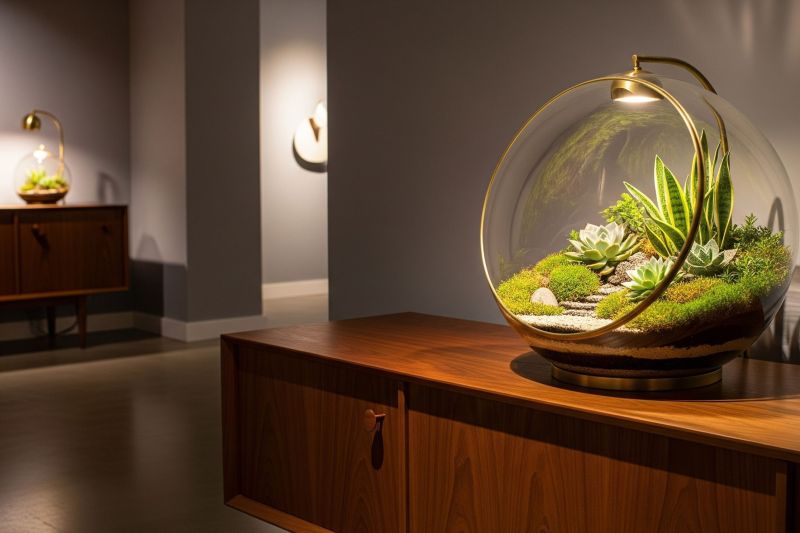
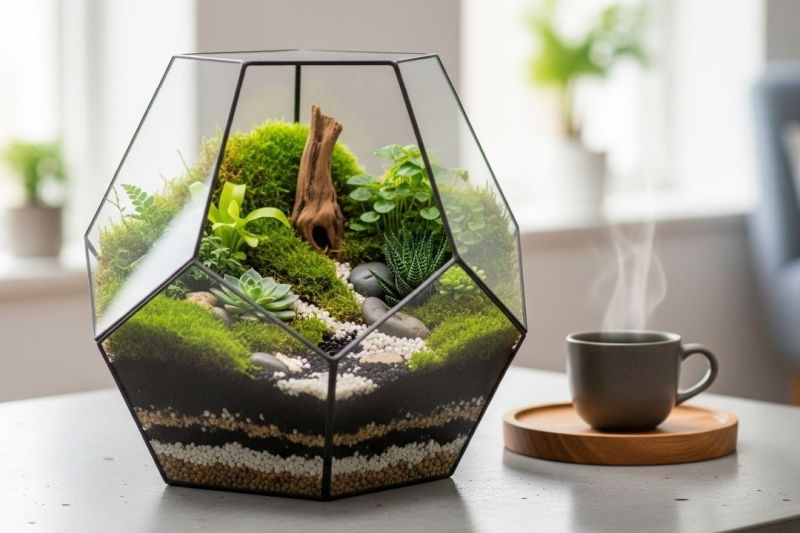
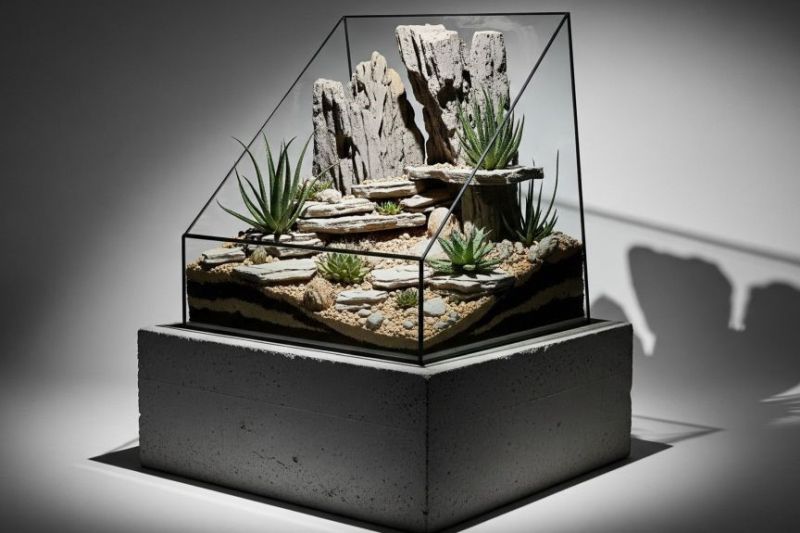
More than just a container for plants, it was an element of social status and a piece of botanical art, with an elegant design characteristic of the time.
A Victorian terrarium is both a miniature world of greenery and a reflection of a design era steeped in ornament, curiosity, and romance.
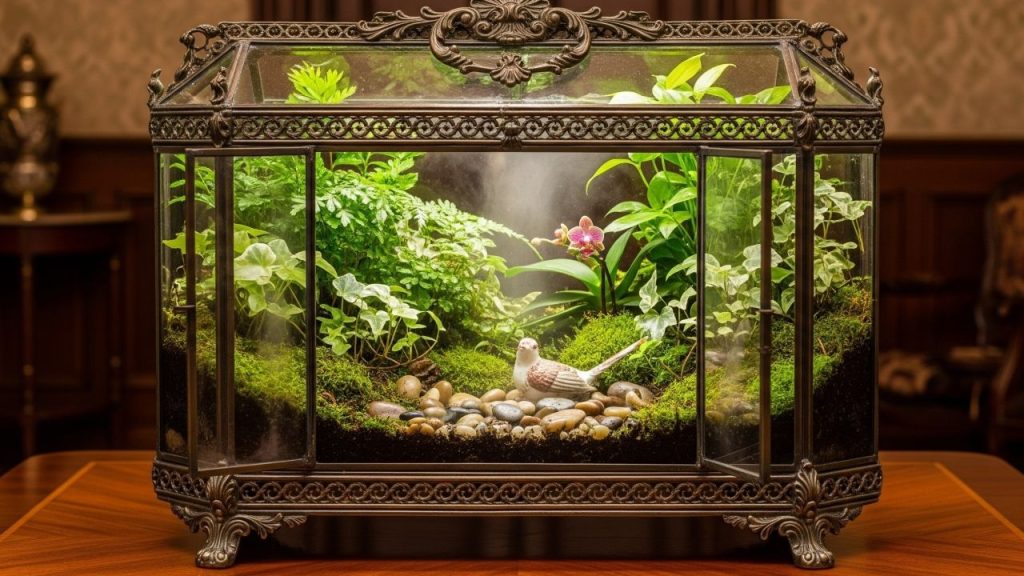
It is usually a glass enclosure framed in wrought iron, brass, or wood, often taking the form of a wardian case—a rectangular or domed structure with tall panes of glass and a hinged top for ventilation.
The Victorians adored symmetry and refinement, so these terrariums often echoed the look of miniature greenhouses or conservatories, with slender mullions, decorative finials, and beveled edges that gave them an architectural elegance.
A Status Symbol
A Victorian terrarium wasn’t just a plant container—it was a cabinet of living curiosities, a symbol of status and education during an age of exploration and discovery.
Its design and contents spoke of a fascination with nature, science, and the exotic, often evoking the atmosphere of a lush, miniature jungle sealed behind glass.
Placed in drawing rooms or studies, they served as living ornaments, bridging the ornamental tastes of the period with the scientific spirit of the time.
What were ancient terrariums like?
Ancient terrariums weren’t decorative domes filled with moss like today. They were functional micro-environments—clay pots, glass vessels, or alabaster containers—used to transport, protect, and sometimes ritualize plants, slowly evolving into the aesthetic, scientific, and artistic terrariums we know now.
Miniature Greenhouse
A Victorian terrarium is like a little jewel box of the natural world, a glass sanctuary where time itself seems to slow.
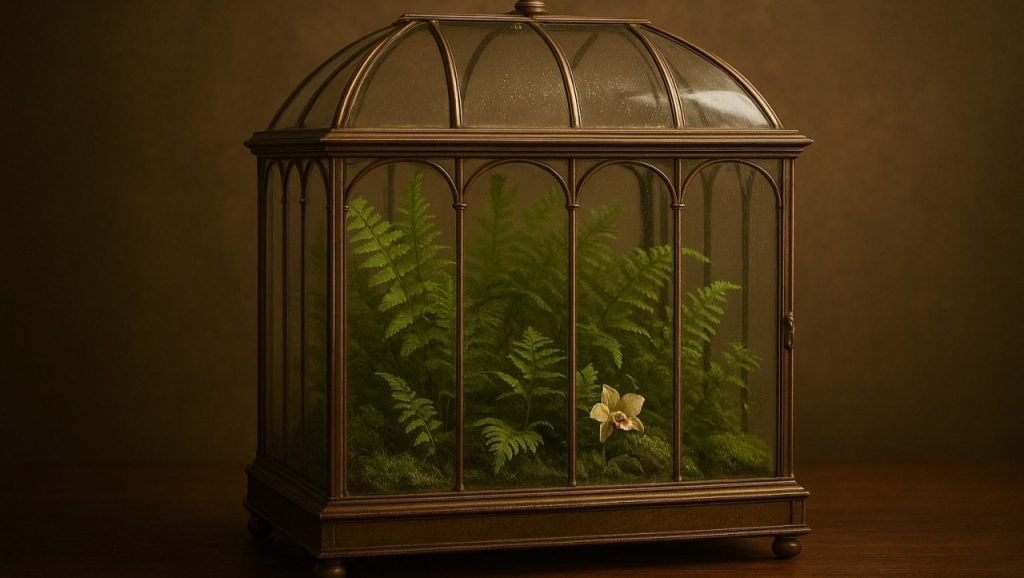
Imagine a miniature greenhouse, framed in dark wood or wrought iron, its panes catching the light like cathedral windows.
Within it lies a secret garden—ferns curling like delicate scrolls, mosses spreading like velvet carpets, and orchids rising as exotic treasures brought from faraway lands.
Victorian Dream
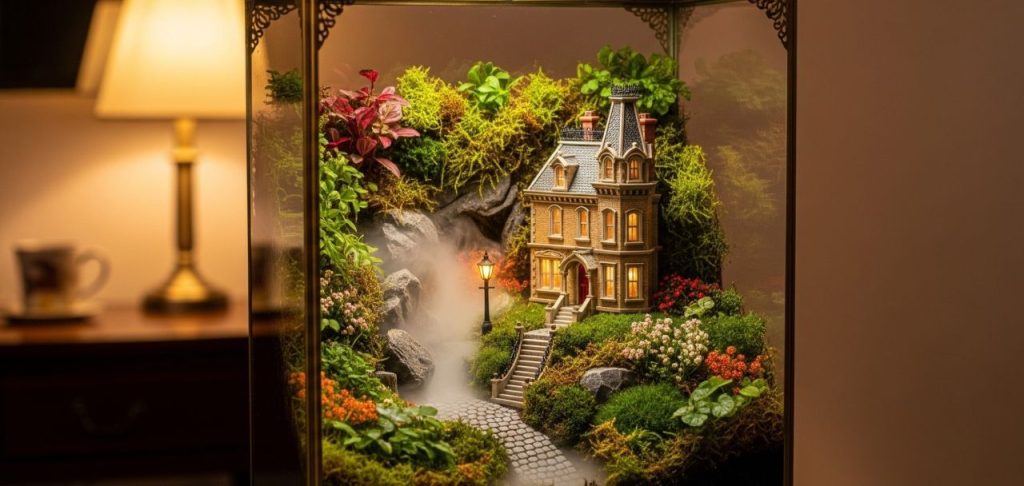
It is not merely a container but a theater of wonder, a living diorama where nature performs behind glass.
The air inside shimmers with condensation, every droplet a tiny mirror of the world outside, while the plants bask in their eternal spring.
To gaze into one is to glimpse a Victorian dream of exploration and order, where the wildness of jungles and forests is tamed into a domestic ornament.
Placed in the corner of a parlor, it whispered of voyages across oceans, of science mingling with beauty, of a society enthralled by both discovery and display.
A Victorian terrarium is less an object than a poem in glass and green, an invitation to hold the vastness of nature in a delicate, curated world.
Different Types of Terrariums