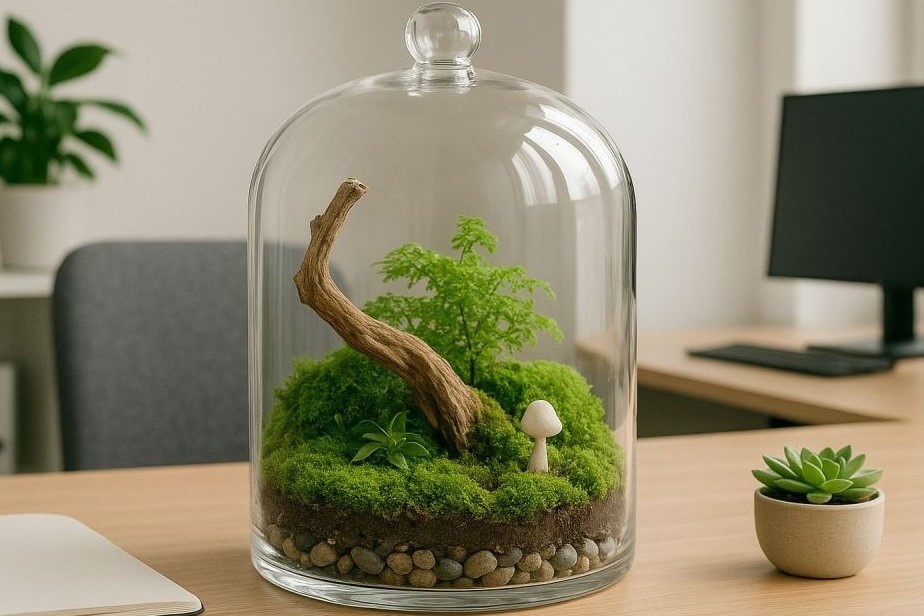
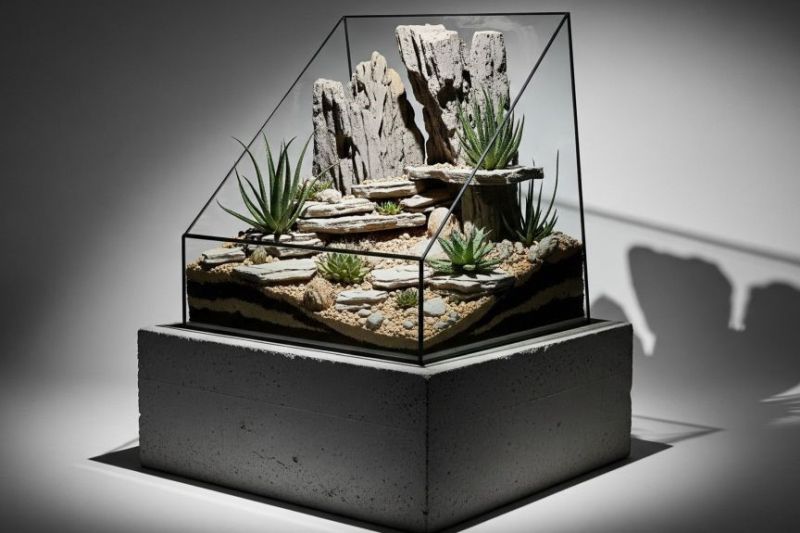
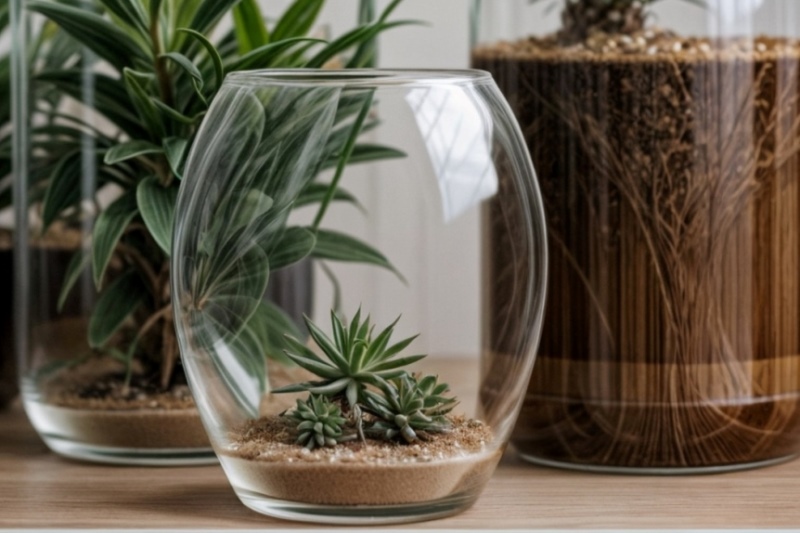
A modern terrarium is like a tiny world enclosed within glass, a curated ecosystem that blends nature and design into one object.
Unlike the Victorian-era terrariums, which were more like sealed glass cases for exotic plants, today’s terrariums are both functional ecosystems and aesthetic statements.
Modern terrariums can be open or closed and feature a sophisticated combination of textures, colors, and layers to create a unique, aesthetically pleasing display of plant life that enhances contemporary interiors.

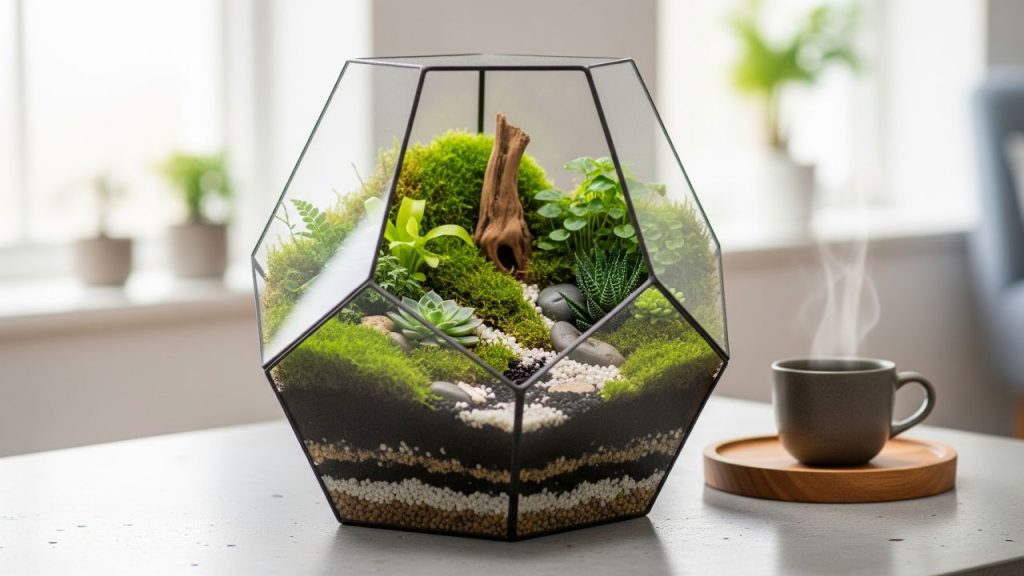
The Vessel: A Blend of Form and Function
Imagine a clear vessel—geometric, spherical, or even asymmetrical—where layers of stone, soil, and moss create a miniature landscape.
Inside, small plants such as succulents, air plants, ferns, or even carnivorous species are carefully arranged to form an intimate scene.
Some terrariums look like lush, misty forests in miniature, while others resemble abstract sculptures with sparse, desert-like plantings.

The Landscape: Intentional and Artistic
The “modern” aspect comes from their fusion of minimalism, art, and sustainability:
- Design-forward: Glass containers are often sleek and geometric, like prisms, cubes, or spheres, emphasizing clean lines and modern aesthetics.
- Low-maintenance living decor: They bring greenery indoors without requiring the commitment of a garden, thriving on natural cycles of condensation and light.
- Experiential: They’re not just decorations but living pieces, evolving slowly, reminding us of growth and time.
In homes, offices, or public spaces, a modern terrarium is more than a plant container—it’s a living sculpture, a self-contained microcosm of nature that invites curiosity, calm, and a sense of connection to the natural world.
Comparison of modern open terrariums with closed ones
- Closed terrariums = little rainforests, self-sustaining, humid, dreamy.
- Open terrariums = little deserts or design objects, airy, sculptural, vibrant.
Both are considered “modern” because they’re not just about growing plants—they’re about bringing a curated slice of nature indoors, shaped by design trends (geometric glass, minimalism, biophilic interiors).
Modern terrarium, then, is not just a container of plants but a layered composition, where each stratum plays its part: the stones breathe, the charcoal purifies, the soil nourishes, the plants sculpt, and the accents tell a story.
More than just a pot with plants, a modern terrarium is a miniature world. It is a snapshot of a larger landscape—a tiny forest, a desert oasis, or a mossy glen—that brings a touch of wild, serene nature into the home or office. It is a living, breathing sculpture that offers a connection to the natural world in a compact and elegant package.
Modern terrarium ideas
Alright, if you’re poking around for modern terrarium vibes, there are some really fun directions people are taking right now. It’s kind of wild how something as tiny as a glass bowl with plants can become this whole little art moment.
Here are some of the trendiest modern styles floating around lately:
- Ultra-Minimalist Glass Capsules
- Foggy Micro-Forest (Moss + LED)
- Brutalist Terrariums
- Cosmic / “Lunar Surface” Terrarium
- “Plant + Object” Concept Terrariums
- Floating Terrariums
- Lab-Inspired Terrariums
- Layered Patterns
People have been going crazy with gravel art: clean layers, but with repeated patterns — diagonals, waves, or ombre colors. Inside a rectangular container it looks like a tiny modern abstract painting under your plants.
Different Types of Terrariums