Brutalism, known for its geometric shapes, use of exposed concrete, and austere aesthetic, has found a new realm of expression: terrarium design.
This fusion of architecture and botany gives rise to unique pieces, where nature is integrated into containers with hard lines and raw materials, generating a visual contrast that leaves no one indifferent.
The juxtaposition of the cold, stark lines of Brutalist architecture with the organic, living forms of plants creates a striking and dynamic aesthetic.

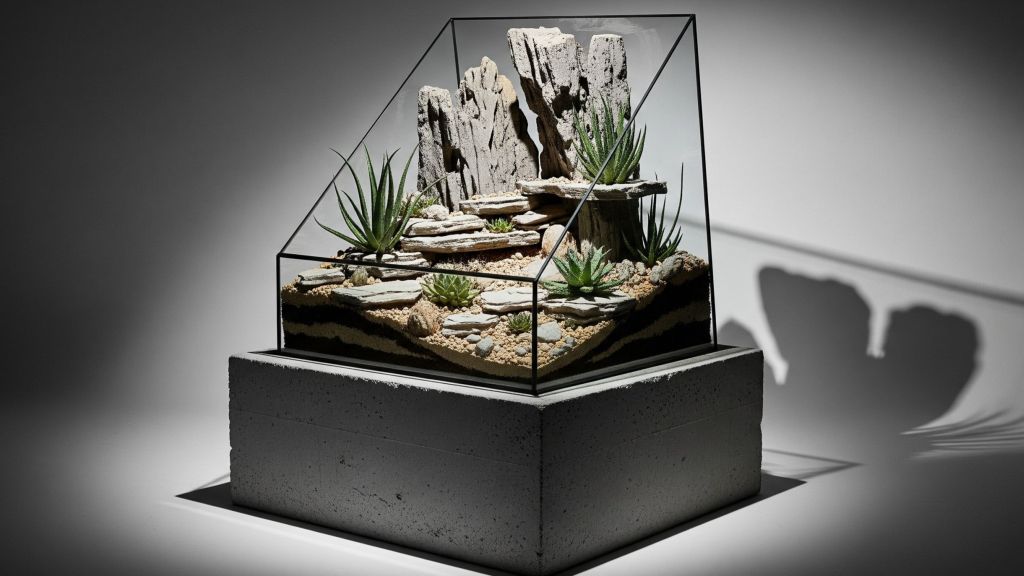
Nature in Concrete Structures
A brutalist terrarium is not just a plant container; it’s a sculptural piece. Its geometric shapes—cubes, prisms, blocks—resemble fragments of a city transformed into micro-gardens. The cold, austere cement highlights the intense green of the succulents or the softness of the mosses, generating contrasts that seem designed by nature itself.
Every angle and every texture are a reminder that beauty isn’t always delicate; sometimes, it also emerges from the raw, the rough, and the unfinished.
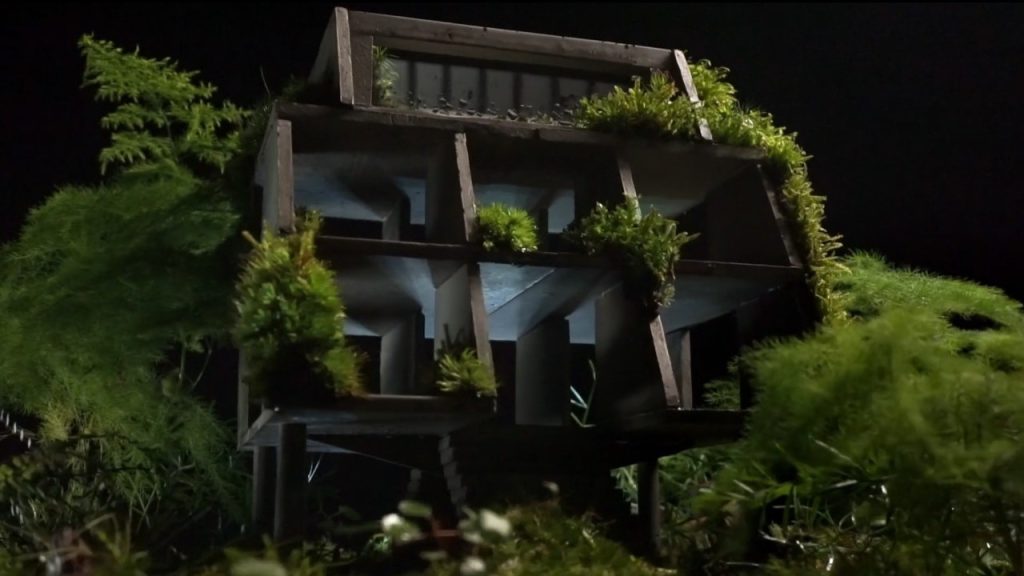
Objects That Tell Stories
A Brutalist terrarium is not just decoration: it is a story. It speaks of the force of life that springs forth even in the harshest environments, of the encounter between city and nature, of the possibility of finding calm in the monumental.
Placed in a creative studio, a minimalist office, or a bright living room, it becomes a point of contemplation: a green and concrete pause amidst the daily rhythm.
Brutalist terrariums are more than miniature gardens. They’re a reminder that even in the solid and unforgiving, there’s always room for life.
Transforming Rigid Architecture into a Thriving Ecosystem
A way to transform sealed glass terrariums into poetic and sculptural battlegrounds between concrete and life. Each design expands, where nature is not an afterthought in architecture, but a protagonist claiming its space.
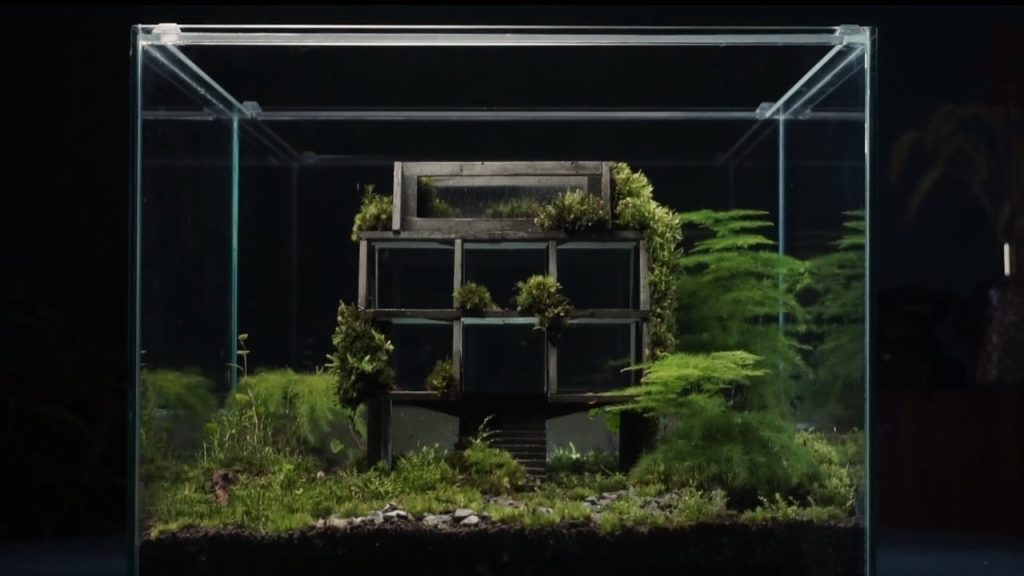
It captures the tension between decay and growth
Handcrafted from polystyrene molds and cast in custom concrete mixes, the miniature Brutalist structures exhibit striking geometric forms: raw, austere, and unapologetically architectural.
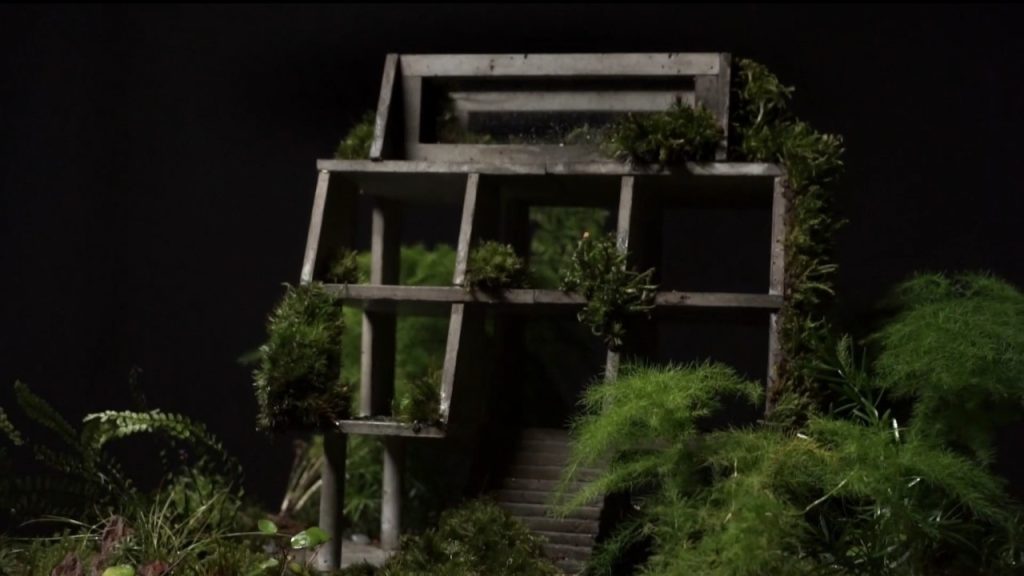
But once sealed in humid glass environments inspired by Japanese moss gardening, their meaning begins to erode. Living mosses and small plants slowly colonize the rigid surfaces, creeping through cracks and spilling over sharp lines.
What begins as a sculptural object becomes a living system: porous, unpredictable, and alive.
Nature doesn’t ask permission. It grows, even in concrete, even within the cracks.
It captures that unstoppable tension between decay and growth, permanence and entropy.
Each terrarium is a quiet rebellion: a reminder that even the most unyielding structures will one day be softened by time, moss, and life. Each piece explores what happens when nature reclaims architectural space.
The sculptures are handmade using polystyrene molds and cast in a custom concrete mix.
Choice of plants and accessories
The plants themselves would need to be carefully chosen to complement this style. Succulents, cacti, and other drought-tolerant plants with strong, sculptural forms would work well. Plants with delicate leaves or soft colors might be out of place, while those with sharp spines, fleshy pads, or a muted green palette would be right at home.
The result of this fusion would be a terrarium that is not just a miniature ecosystem, but a work of art that challenges traditional notions of beauty. It’s about finding harmony in contrast—the living and the inert, the soft and the hard, the natural and the man-made. This is an exciting and creative new application of an architectural style that has often been misunderstood.
Different Types of Terrariums