A mid-century modern (MCM) terrarium embodies mid-20th-century design principles, combining clean lines, organic shapes, and a futuristic, atomic-age aesthetic.
Popular from the 1940s to the 1960s. These vintage pieces act as functional art, bringing nature indoors with a distinctly retro feel.
A mid-century modern terrarium feels like a living sculpture in a cozy modern home.

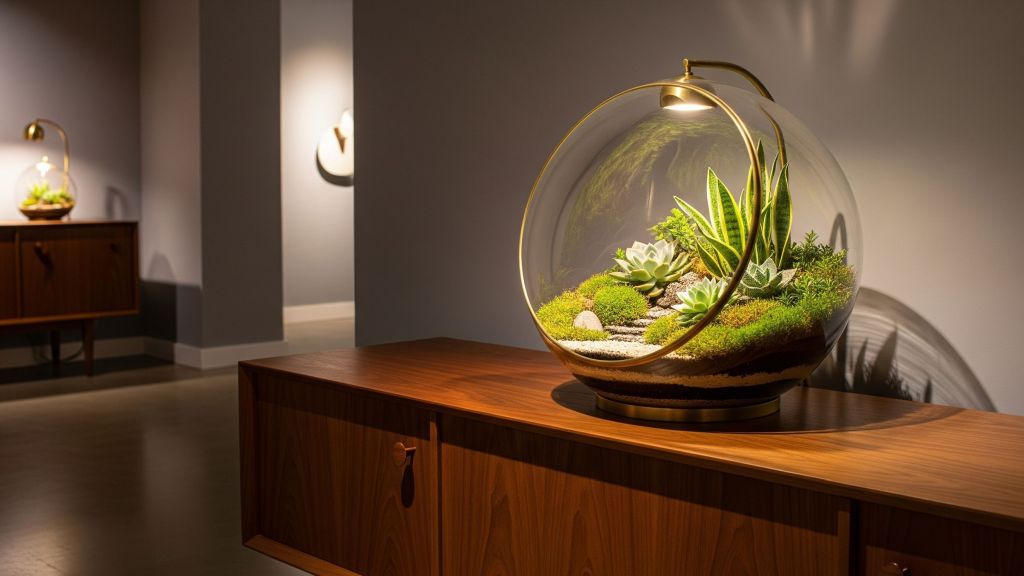
Elements of mid-century style
A mid-century modern terrarium is not just a container of plants—it’s a design statement. It merges natural life with the sleek, iconic aesthetic of mid-century design, creating a calming, sculptural accent that feels timeless and sophisticated. These typically include:
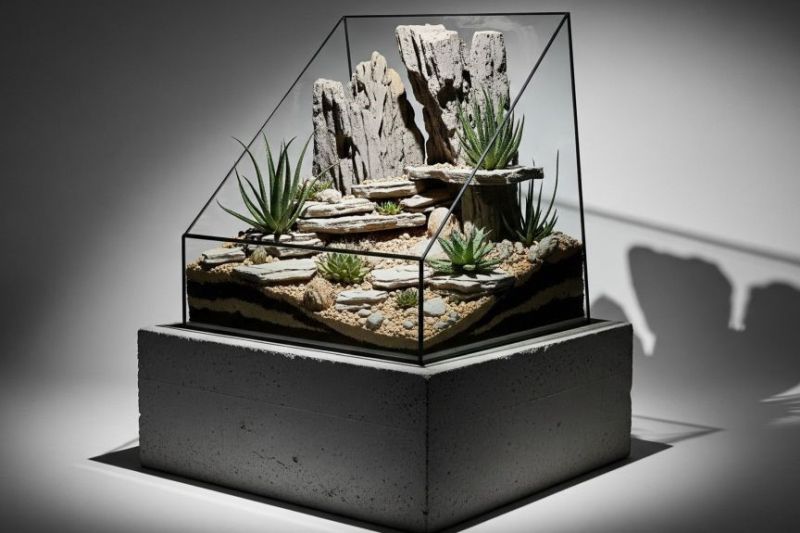
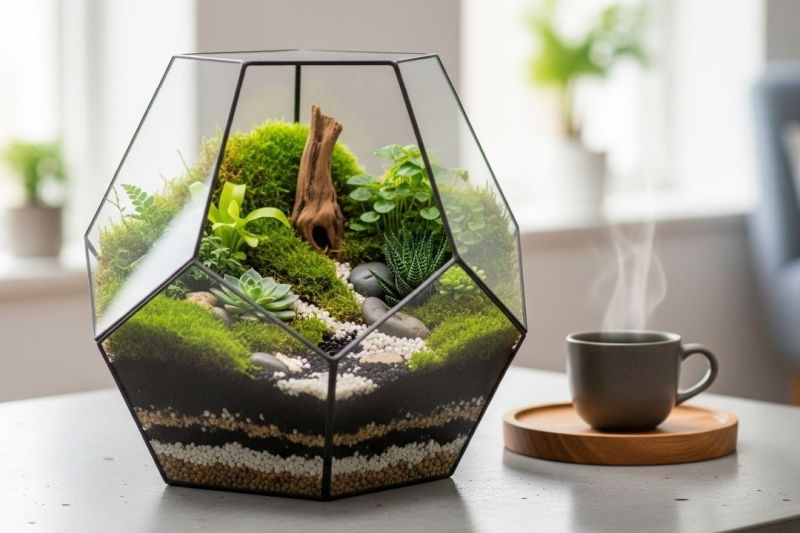
- Geometric vessels: Glass containers in globe, cylinder, cube, or asymmetrical polygon shapes, sometimes framed with thin brass or black metal edges. These forms echo the era’s love for simple, functional geometry.
- Natural textures: Bases of smooth pebbles, polished wood trays, or ceramic planters with matte finishes that highlight the natural beauty of the plants.
- Lush yet minimal planting: A careful selection of succulents, air plants, mosses, or small tropical species arranged with restraint, avoiding clutter to keep the design airy and modern.
- Earthy and muted tones: Greens balanced with accents of warm browns, whites, and occasional pops of mustard, teal, or burnt orange, echoing mid-century interior palettes.
- Integration with furniture: Often displayed on tapered wooden stands, sideboards, or coffee tables, so the terrarium feels like part of the overall décor rather than a separate object.
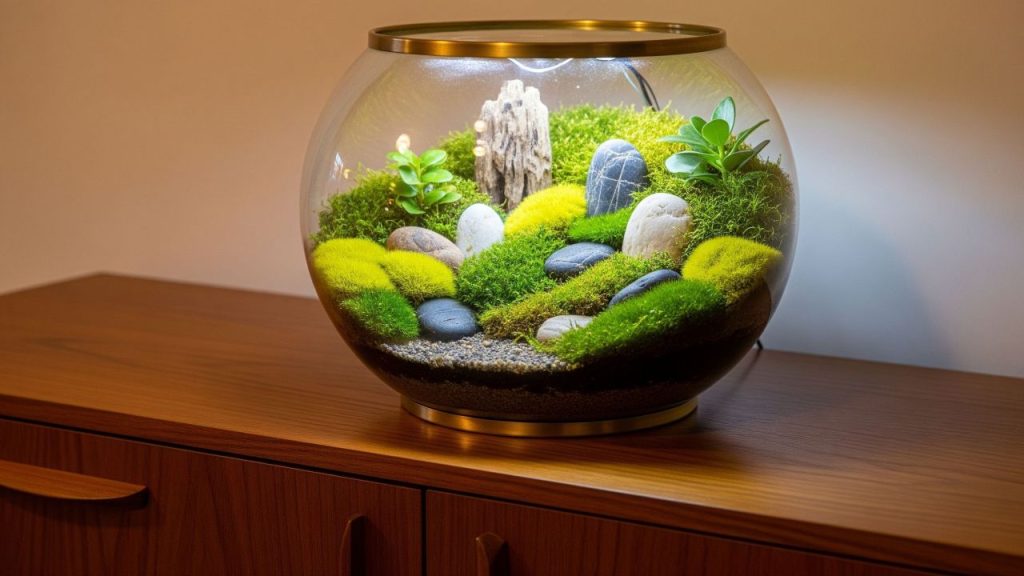
Living Glass, Living Philosophy
A terrarium is never just a vessel of plants. It is a philosophy under glass, a curated fragment of the earth arranged to echo human ideals of beauty, harmony, or power.
When placed within the language of design, terrariums become miniature manifestos — small but eloquent reflections of the way we wish to see ourselves in relation to nature.
The mid-century modern terrarium embodies the optimism of its era. Born from a design movement that celebrated organic simplicity and human-scaled warmth, its form is light, graceful, and approachable.
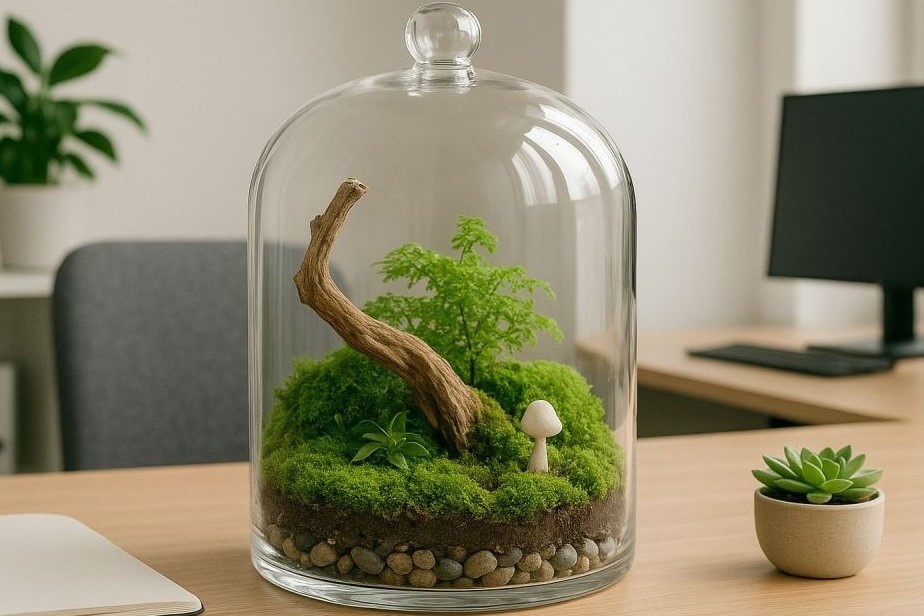
A round glass globe edged in brass or perched delicately on a wooden stand invites us to look inward. Inside, carefully chosen mosses, ferns, or succulents rest in balanced compositions, as though time itself has slowed within the transparent dome.
It is not wilderness but curated nature — nature shaped for harmony with the modern home. To gaze into it is to glimpse a vision of balance, a reminder that design can be both functional and tender, rational yet alive.
Terrariums as Worlds of Thought
A terrarium is never only a vessel of plants. It is a philosophy distilled into glass — a fragment of earth suspended in time, a miniature cosmos that reflects not only nature but the way humans dream of inhabiting it.
Each design choice becomes symbolic: the curve of the container, the grit of the soil, the resilience of a plant. When framed through design movements, terrariums transform into living metaphors — glass-bound testaments to how we see beauty, order, and survival.
Different Types of Terrariums